MAMMOGRAPHY
It provides high-resolution imaging of the breast and is the primary preventive examination
for the early detection of breast abnormalities, as it can reveal lesions at their initial stages of
development (in situ), even before they become palpable by a clinical doctor or the woman
herself. Advances in mammography imaging technology now make it possible in many cases to diagnose abnormalities early, enabling effective treatment of breast cancer, which today is, in a significant percentage of cases, a curable form of cancer—thanks in large part to the widespread use of preventive mammography.
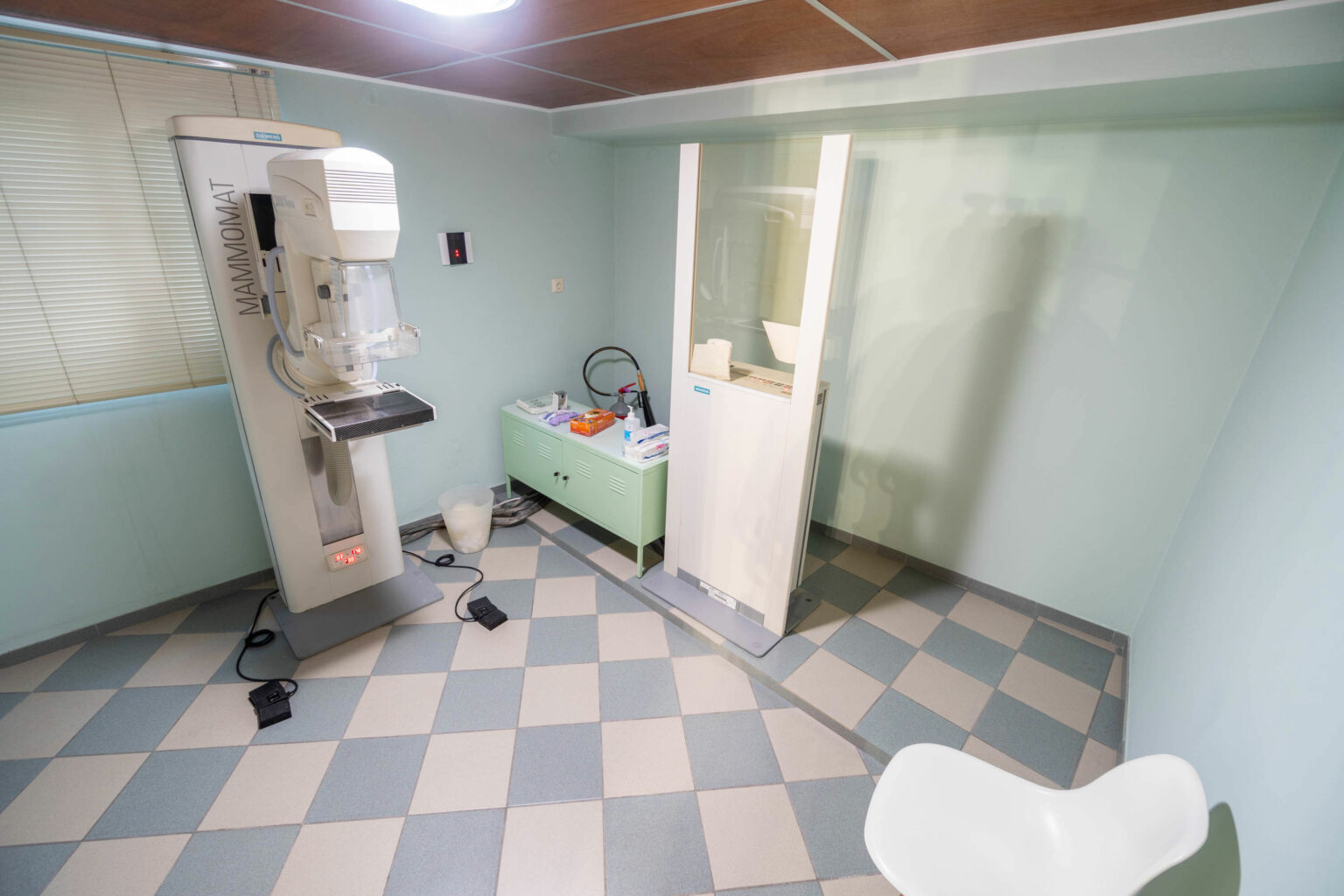
The examination consists of two images per breast, one craniocaudal and one mediolateral, during which each breast is placed individually on a special platform and lightly compressed to ensure the most uniform distribution of tissue possible during imaging. Overall, it is a short procedure, and together with the collection of relevant medical history, it takes about 15–20 minutes. For women of reproductive age, mammography is recommended between the 4th and 10th day of their menstrual cycle.
According to the guidelines of the American Cancer Society, which have also been adopted by the Hellenic Society of Breast Surgeons (?), mammography is recommended once between the ages of 35 and 40 as a reference image for future examinations, and then annually from the age of 40 and above. This applies to women without a family history of breast cancer (i.e., no first-, second-, or third-degree relatives with a diagnosed malignancy of the breast). For those with a family history, it is advisable to consult their physician and develop a personalized preventive screening plan, as they may need to undergo their first
mammogram earlier or more frequently than the general population.
Mammography, when combined with breast ultrasound and regular breast self-examinations, constitutes a reliable system for the prevention and early detection of breast cancer. Therefore, it is beneficial to use all three methods complementarily and regularly.
Instructions for effective breast self-examination can be found here.