
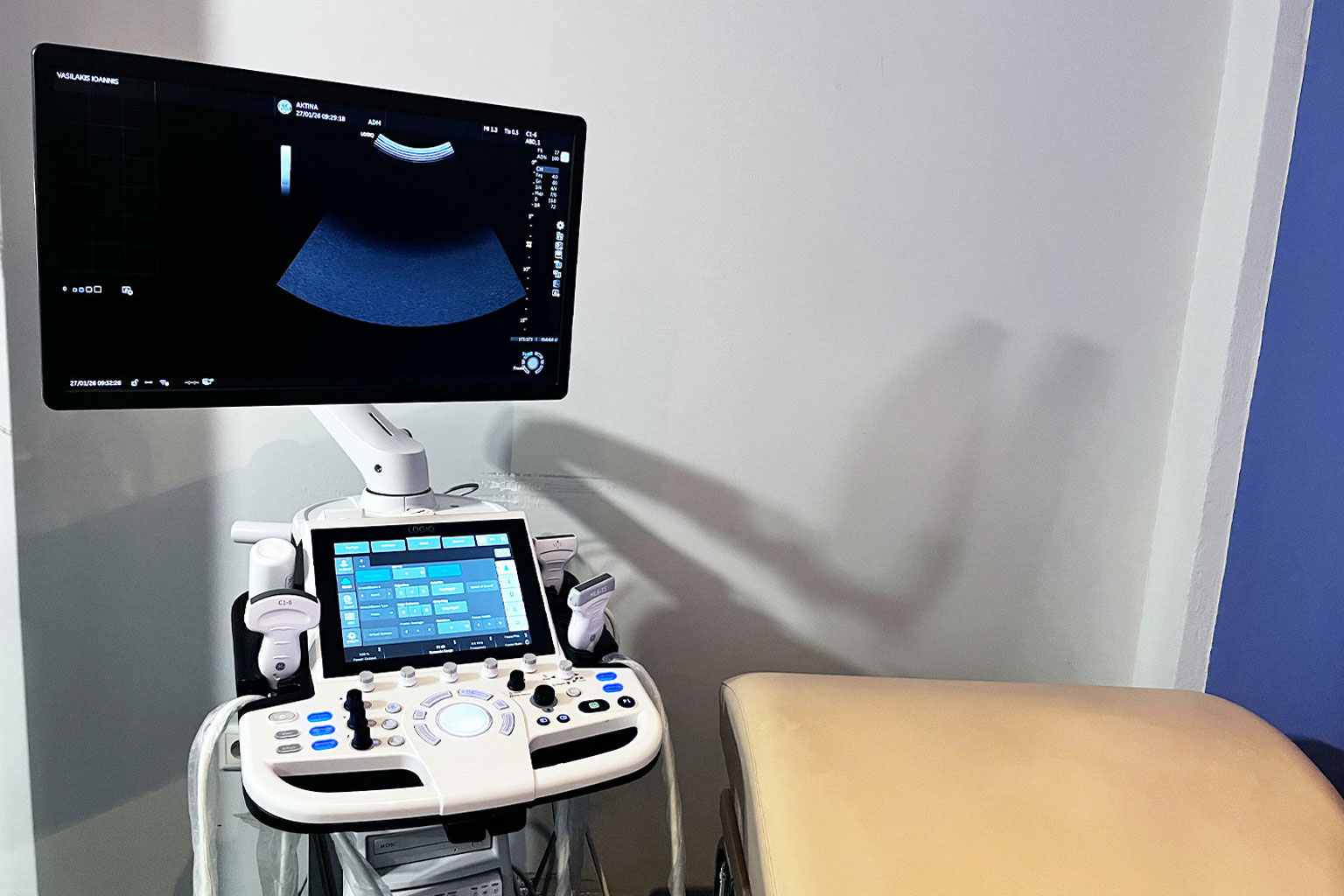
ΥΠΕΡΗΧΟΓΡΑΦΗΜΑ ΜΑΣΤΩΝ
It is used as the primary imaging method for the breast in younger women, where due to
higher breast density, mammography may not be the optimal technique. However, for women aged 40 and above, breast ultrasound serves only as a supplementary examination to mammography and not as a replacement. That is, women in this age group should undergo a mammogram first, and then, if recommended by the radiologist, proceed with a breast ultrasound.
Ultrasound is a painless and simple procedure for the patient, as it involves no radiation
exposure. It is performed by gently scanning the area with the ultrasound probe and may
include the examination of the axillary (underarm) lymph nodes. It is recommended to be performed between the 7th and 12th day of the woman’s menstrual cycle, if applicable.
Specifically for the prevention and early diagnosis of breast cancer, breast ultrasound is an examination of particular importance, as it supports the following diagnostic aspects:
1. Detection of masses:
- It can distinguish whether a mass is solid or a fluid-filled cyst.
- It is used to examine areas that have appeared suspicious on clinical palpation
or mammography.
2. Complementary tool to mammography:
- Especially valuable in young women with dense breast tissue, where mammography may not provide sufficient clarity.
- It helps to better visualize and categorize suspicious findings.
3. Biopsy guidance:
- It is used to guide the needle during a core needle biopsy, when tissue sampling is necessary.
Finally, in women who are breastfeeding or pregnant, ultrasound is not recommended as a definitive diagnostic method, since the physiology of the breast undergoes significant changes during these periods, which may confuse the radiologist or produce misleading imaging results.